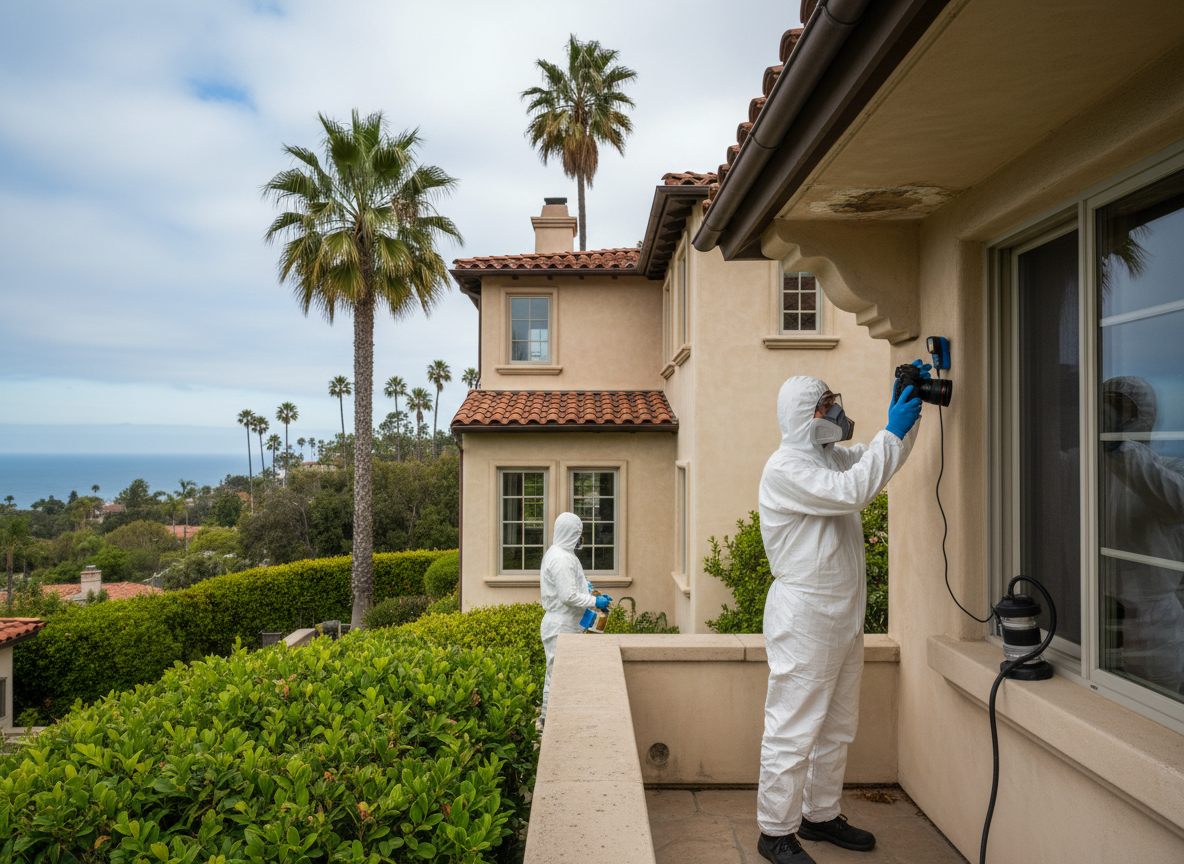
Pacific Palisades properties in neighborhoods such as Marquez Knolls and Castellammare often feature mid-century builds with crawl spaces and hillside foundations that trap moisture from the area's mild coastal Mediterranean climate and frequent foggy mornings. These conditions allow condensation to form behind drywall and under flooring, creating hidden mold colonies that standard visual checks miss. Our inspection process uses moisture meters and thermal imaging to trace water intrusion paths common near Will Rogers State Historic Park and Pacific Palisades Park, where slope drainage and ocean air combine to affect older stucco and wood-frame homes.
Los Angeles County regulations require thorough documentation of moisture sources before any remediation begins, especially in homes near Santa Monica and Malibu where salt air accelerates corrosion of HVAC components and window seals. We map affected zones room by room, checking attics, bathrooms, and exterior walls for elevated readings that indicate ongoing leaks from irrigation or roof valleys. This step prevents unnecessary demolition while identifying the exact extent of growth that could spread through shared walls in The Village.
Homeowners frequently overlook how Temescu Park's microclimate funnels fog into lower-lying streets, raising indoor humidity levels that support mold on insulation and subfloors. Our technicians document these patterns with photos and readings, providing a clear map for targeted follow-up work rather than broad removal guesses. The result is an inspection report that reflects actual site conditions instead of generic checklists.
Technician insight
In Pacific Palisades, the thing that catches most people out with Mold inspection near me is assuming foggy mornings only affect the coast when in fact they drive condensation into crawl spaces of 1950s homes in Castellammare and Marquez Knolls. Homeowners often seal visible spots without tracing how the marine layer moves through hillside drainage paths, which restarts growth within weeks.
Hidden Growth Behind Bathroom Wall
A homeowner in The Village noticed musty odors after several weeks of heavy fog. Inspection revealed elevated moisture behind tile from a slow shower leak that had traveled along the foundation slope. We mapped the full extent with meters and thermal scans, then isolated the source so targeted drying could begin without opening unaffected rooms.
How it works
- 1
Initial Assessment
We review the property's history of leaks or humidity issues while walking through Pacific Palisades homes to note visible signs in high-risk zones like attics and basements.
- 2
Moisture Mapping
Technicians use calibrated meters to record readings across walls, floors, and ceilings, focusing on areas where coastal fog creates persistent condensation.
- 3
Sampling and Documentation
Air and surface samples are collected where readings exceed normal thresholds, then labeled with location details for lab analysis.
- 4
Report Delivery
A written summary outlines findings, moisture sources, and recommended next steps based on the specific conditions found at the address.
Pricing
Inspection cost depends on square footage, number of stories, and access difficulty in hillside Pacific Palisades properties.