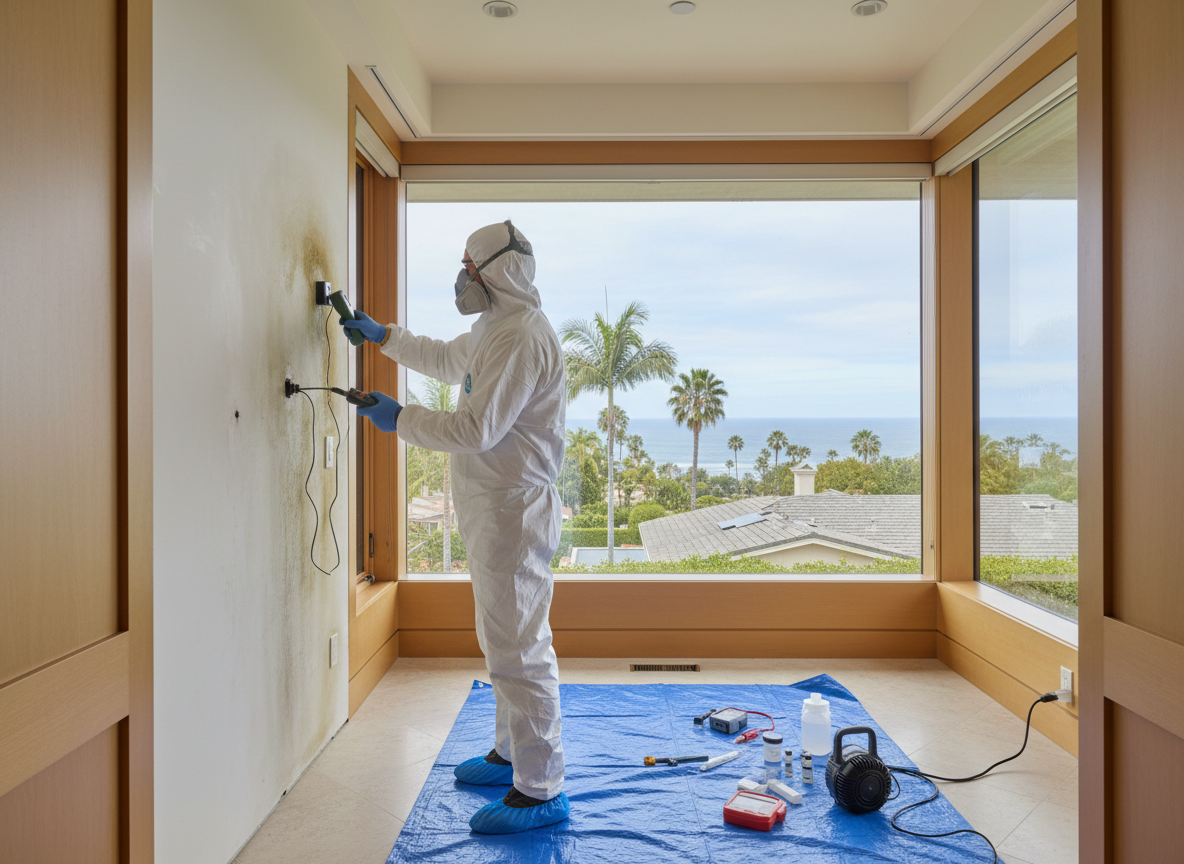
Pacific Palisades sits in Los Angeles County with a mild coastal Mediterranean climate that brings frequent foggy mornings, especially near the ocean. This persistent moisture seeps into crawlspaces and behind stucco on homes built decades ago in neighborhoods like The Village and Castellammare. During inspection we focus on these entry points because the fog keeps relative humidity elevated even when the sun eventually breaks through, allowing mold to establish in attics and wall cavities that stay cooler than the rest of the house.
Marquez Knolls properties often sit on sloped terrain that directs rainwater toward foundations during rare but intense winter storms. We check grading, downspout extensions, and any low spots where water pools against siding. Older single-story ranch homes common in the area frequently have original plumbing that can develop slow leaks under slabs or in utility rooms, so inspectors use moisture meters on concrete and behind cabinets rather than relying on visible signs alone.
Santa Monica and Malibu borders mean some Pacific Palisades homes share the same hillside drainage patterns that can push groundwater toward lower levels after heavy rain. We pay special attention to Temescu Park area properties where mature landscaping sometimes blocks airflow around foundations. Inspections include lifting a few floor registers and checking HVAC ducts because coastal salt air accelerates corrosion on metal components that then trap condensation.
Will Rogers State Historic Park and Pacific Palisades Park sit at higher elevations where morning fog lingers longer in shaded canyons. Homes nearby often have deeper crawlspaces that stay damp year-round. We document every reading and photograph suspect areas so homeowners can see exactly where conditions support growth before any remediation begins.
Technician insight
In Pacific Palisades, the thing that catches most people out with Home mold inspection is how the morning fog from the coast keeps crawlspaces under 1950s and 1960s homes in The Village and Castellammare damp even when the rest of the house feels dry. Homeowners often miss the slow condensation on ductwork because they only check after a rainstorm instead of during the foggy season.
Crawlspace Inspection in Castellammare
A homeowner in Castellammare noticed a musty smell after several foggy weeks. We found elevated moisture on joists and insulation where coastal air had been trapped under the house. We documented the readings, recommended ventilation improvements, and provided a clear report the same day so repairs could start before growth spread.
How it works
- 1
Initial Walkthrough
We start outside, checking rooflines, gutters, and grading around the foundation for signs of water intrusion common after coastal fog and winter rains.
- 2
Interior Moisture Mapping
Inside we use meters on walls, floors, and ceilings, paying extra attention to bathrooms, laundry areas, and any rooms below grade in Castellammare homes.
- 3
Crawlspace and Attic Access
We enter accessible crawlspaces and attics to inspect insulation, joists, and ductwork where persistent morning fog keeps surfaces damp longest.
- 4
Report and Recommendations
Findings are compiled into a clear written report with photos and next-step options, delivered the same day for 24/7 service calls.
Pricing
Pricing depends on square footage, number of stories, and whether crawlspace or attic access is required; contact us for an upfront quote.