Pacific Palisades sits in Los Angeles County with a mild coastal Mediterranean climate that brings frequent foggy mornings, especially in Castellammare and Marquez Knolls. These conditions drive moisture into older single-family homes built on hillsides near Will Rogers State Historic Park and Pacific Palisades Park. Attics and crawl spaces in these properties often lack adequate ventilation, allowing condensation to form behind drywall and under flooring when temperatures drop overnight. Professional mold removal here starts with identifying hidden growth rather than surface cleaning alone, because fog-driven humidity can push spores deeper into insulation and framing.
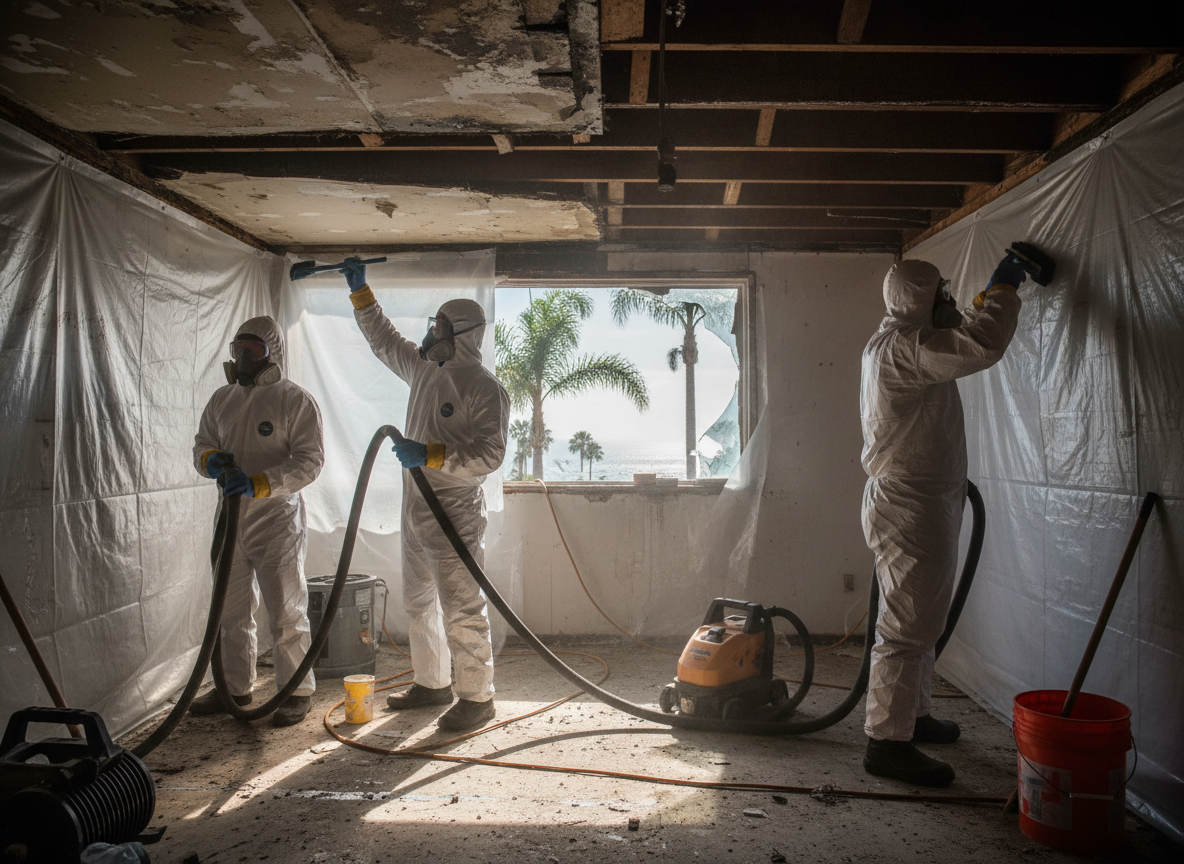
Homes in The Village and along the bluffs near Temescu Park frequently feature mid-century construction with stucco exteriors and flat or low-slope roofs that collect moisture during prolonged marine layers. When water intrusion occurs from clogged gutters or hillside drainage, mold colonies establish quickly in wall cavities and beneath cabinets. Technicians must use containment barriers and negative air machines to prevent cross-contamination into adjacent rooms, then remove affected materials before drying the structure with dehumidifiers sized for the local humidity load. Skipping hidden moisture checks in these older builds often leads to recurrence within months.
Santa Monica and Malibu border Pacific Palisades and share similar coastal exposure, yet the steeper terrain here creates unique runoff patterns that push water against foundations during winter rains. Professional mold removal accounts for this by tracing moisture sources uphill and addressing soil contact points that standard interior treatments miss. Crews document every step with photos and moisture readings so homeowners can verify that all affected areas received treatment before walls are closed.
Technician insight
In Pacific Palisades, the thing that catches most people out with professional mold removal is how those foggy mornings keep attics in Castellammare homes damp long after the sun appears, especially in older builds with single-layer roof vents that never fully dry.
Hidden Growth Behind Bathroom Wall
A homeowner in The Village noticed a musty smell after several foggy weeks. Inspection revealed elevated moisture in a shared wall with an exterior hillside slope. Technicians contained the room, removed the affected drywall and insulation, then ran drying equipment for three days until readings normalized.
How it works
- 1
Site Assessment
Technicians inspect attics, crawl spaces and wall cavities in Pacific Palisades homes, using moisture meters to locate hidden dampness caused by coastal fog.
- 2
Containment and Air Filtration
Plastic barriers and HEPA air scrubbers isolate the work area to stop spores from spreading through the ventilation systems common in Marquez Knolls properties.
- 3
Material Removal
Affected drywall, insulation and trim are cut out and bagged for disposal while non-porous surfaces receive antimicrobial treatment.
- 4
Drying and Clearance
Industrial dehumidifiers and air movers run until readings meet industry dry standards, followed by a final visual and meter check.
Pricing
Upfront quotes provided after on-site inspection; cost depends on square footage affected and access to hidden areas.