Pacific Palisades homes in neighborhoods like Castellammare and Marquez Knolls often sit on slopes where drainage directs water toward foundations. Foggy mornings in the mild Mediterranean climate keep relative humidity elevated inside older stucco and wood-frame houses, allowing mold odors to migrate through wall cavities and subfloors even after surface growth is gone. Removing the smell requires locating hidden moisture pockets created by these terrain and weather patterns rather than relying on surface treatments alone.
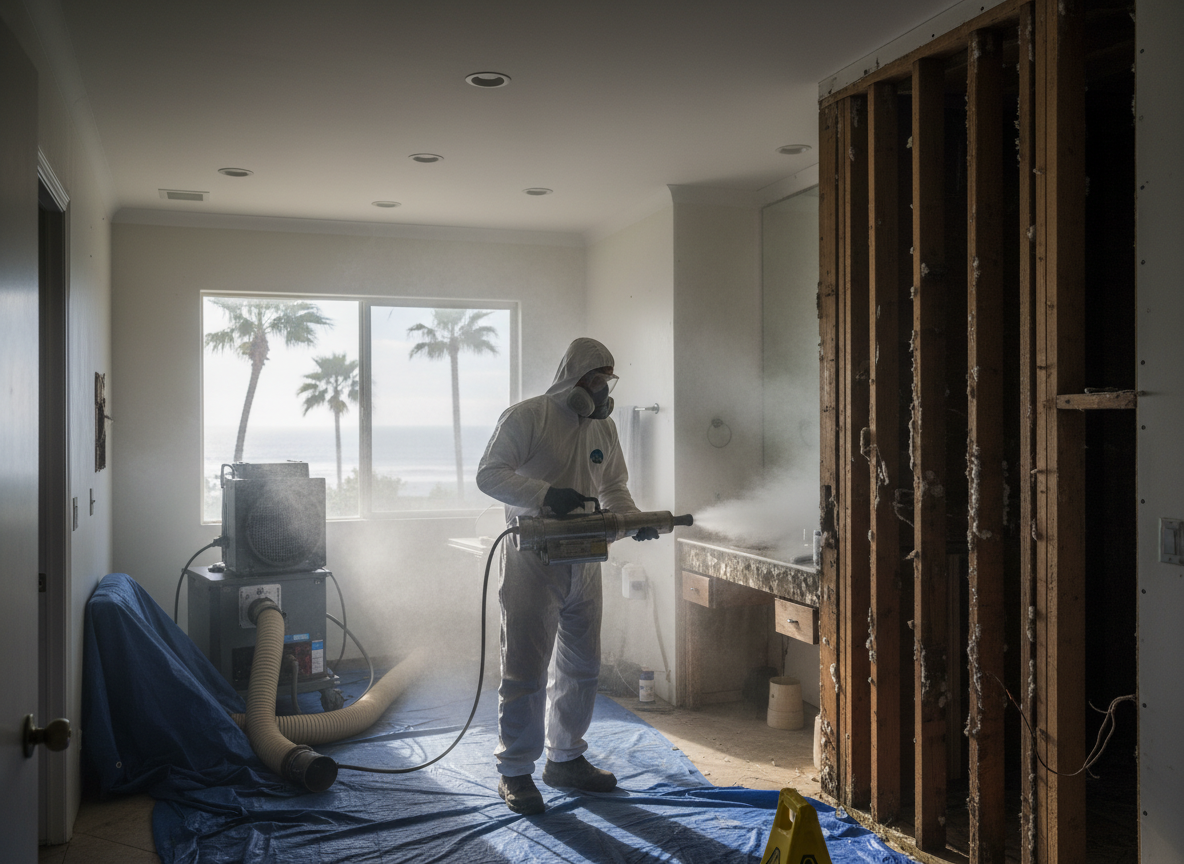
Los Angeles County building practices in the area frequently include crawl spaces and slab-on-grade foundations that trap condensation from marine air. Odor removal here means pulling baseboards, using moisture meters on framing, and applying targeted antimicrobial agents followed by negative-air machines to pull musty particles from behind drywall. Homeowners near Will Rogers State Historic Park or Pacific Palisades Park see recurring issues when irrigation runoff meets the natural fog layer and keeps soil moisture high year-round.
Santa Monica and Malibu borders bring similar salt-air exposure that accelerates corrosion on metal HVAC components, spreading odors through ductwork. Effective remediation includes sealing penetrations, running dehumidifiers calibrated to local dew points, and confirming that attic ventilation prevents re-condensation during the frequent morning fog. These steps address the specific combination of age, slope, and coastal humidity that generic odor sprays cannot resolve.
Technician insight
In Pacific Palisades, the thing that catches most people out with odor removal mold is how the morning fog keeps soil and crawl-space humidity high around Marquez Knolls, letting smells travel through stucco walls long after any visible growth is gone. Homeowners often treat only the surface and miss the drainage paths that slope toward foundations.
Musty Odor in Castellammare Residence
A homeowner noticed a persistent earthy smell in the lower level after heavy winter rains. Inspection revealed moisture trapped behind baseboards where slope drainage met the foggy coastal air. We isolated the area, extracted hidden water from the subfloor, treated wall cavities, and ran scrubbers until readings normalized. The odor did not return once the home dried under normal local humidity conditions.
How it works
- 1
Initial Assessment
Technician inspects affected rooms, checks crawl spaces and attics for hidden moisture sources common in Pacific Palisades hillside homes.
- 2
Source Containment
Isolate areas with plastic barriers and negative air to prevent odor particles from spreading through shared walls in The Village and Castellammare properties.
- 3
Moisture Extraction
Remove standing or trapped water, dry framing and subfloors using equipment sized for the local humidity load from morning fog.
- 4
Odor Neutralization
Apply EPA-registered agents to porous materials and run air scrubbers until musty smells are eliminated from wall cavities.
- 5
Final Verification
Re-test moisture levels and perform clearance checks before returning the home to normal use.
Pricing
Upfront quotes after on-site inspection; final cost depends on extent of hidden moisture in older hillside homes and number of affected rooms.