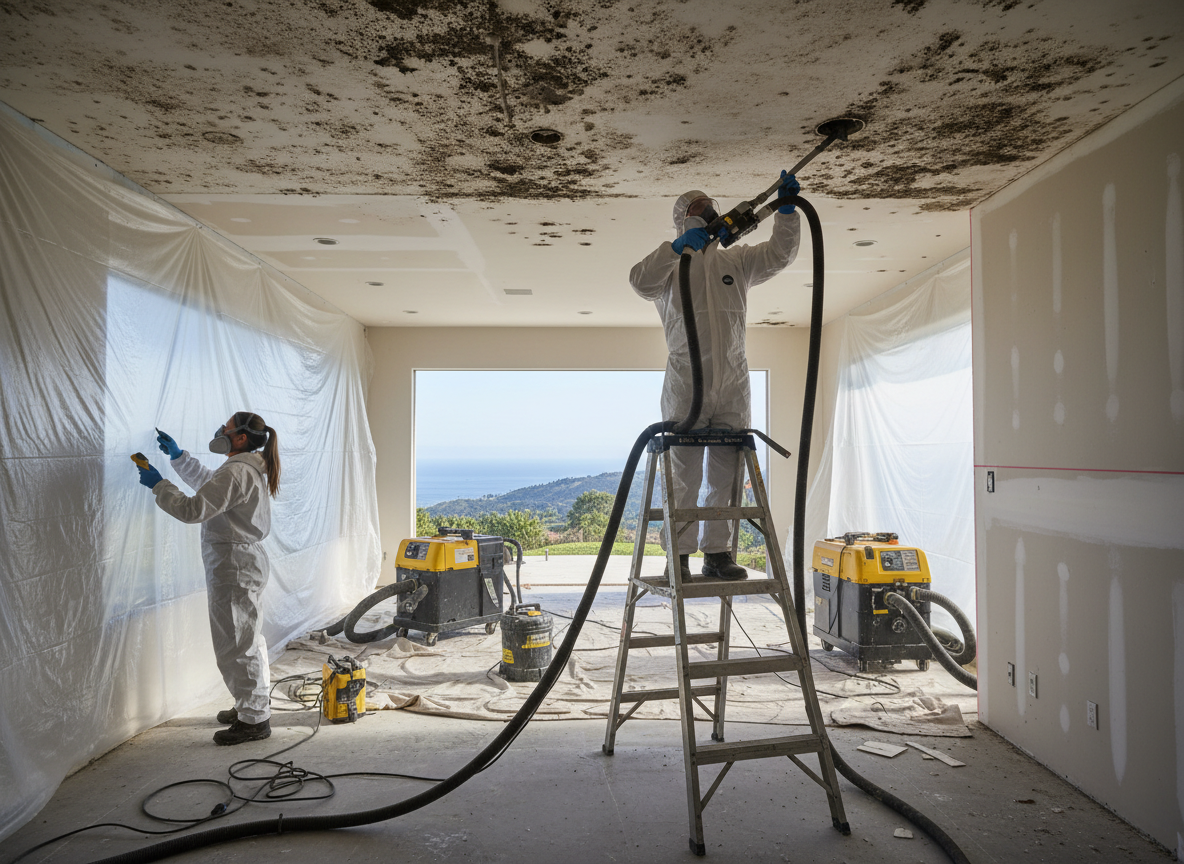
Pacific Palisades sits in a mild coastal Mediterranean climate where foggy mornings regularly push humidity into crawl spaces and wall cavities of homes built decades ago. In neighborhoods like Castellammare and Marquez Knolls, many properties sit on sloped terrain that directs rainwater toward foundations, especially when winter storms follow the dry season. Older stucco and wood-frame construction common here traps moisture against sheathing once leaks start, allowing mold to spread behind baseboards before residents notice musty odors. Remediation crews must often open larger sections of drywall than in newer builds because the original insulation and paper-faced gypsum absorb and hold water longer in this environment.
Homes near Will Rogers State Historic Park and Pacific Palisades Park frequently share the same hillside drainage patterns that push water toward lower lots after heavy rain. When fog lingers into the afternoon, interior surfaces in poorly ventilated bathrooms and laundry rooms stay damp enough for surface growth on tile grout and painted drywall. Technicians working in Los Angeles County follow containment protocols that isolate affected rooms from the rest of the house because spores travel easily through the open floor plans typical in these mid-century homes. Removing and disposing of contaminated materials requires negative air machines running the entire time to protect adjacent living spaces and neighboring properties on narrow streets.
Service calls also cover properties closer to Santa Monica and Malibu where ocean air mixes with inland heat, creating condensation on cooler pipes and ducts. In these cases, remediation often includes cleaning HVAC systems that have circulated spores through the house after a small bathroom leak went unnoticed. Crews check under kitchen sinks and around water heaters because the combination of plumbing penetrations and limited airflow under raised floors allows hidden colonies to establish. Every job ends with moisture readings documented on multiple surfaces so homeowners see exactly which areas remain dry before walls are closed.
Technician insight
In Pacific Palisades the thing that catches most people out with mold remediation company is the fog that rolls in every morning and keeps crawl spaces and under-floor areas damp long after the rain stops. Homes in Castellammare and The Village often have older foundations that channel that moisture straight into wall cavities, so what looks like a small bathroom stain can run the full length of a bedroom wall once we open it up.
Hidden Growth Behind Kitchen Cabinets
A homeowner in Marquez Knolls noticed a musty smell after several foggy weeks but no visible water. Inspection revealed a slow leak at the sink supply line that had soaked the particleboard base and traveled into the adjacent wall. We contained the kitchen, removed the lower cabinets and drywall, treated the studs, and dried the cavity over three days before new materials went in.
How it works
- 1
Initial Assessment
Technician arrives within hours, inspects visible and hidden areas with moisture meters, and identifies the water source in the specific Pacific Palisades property.
- 2
Containment Setup
Plastic barriers and negative air machines isolate the work zone to prevent spore spread to unaffected rooms or neighboring homes on the same block.
- 3
Removal and Cleaning
Contaminated drywall, insulation, and trim are removed and bagged; remaining surfaces receive antimicrobial treatment followed by HEPA vacuuming.
- 4
Drying and Verification
Dehumidifiers and air movers run until moisture levels meet industry standards, then post-remediation testing confirms clearance before reconstruction begins.
Pricing
Cost depends on square footage affected, accessibility of the growth, and whether HVAC cleaning is required; upfront quotes provided after inspection.