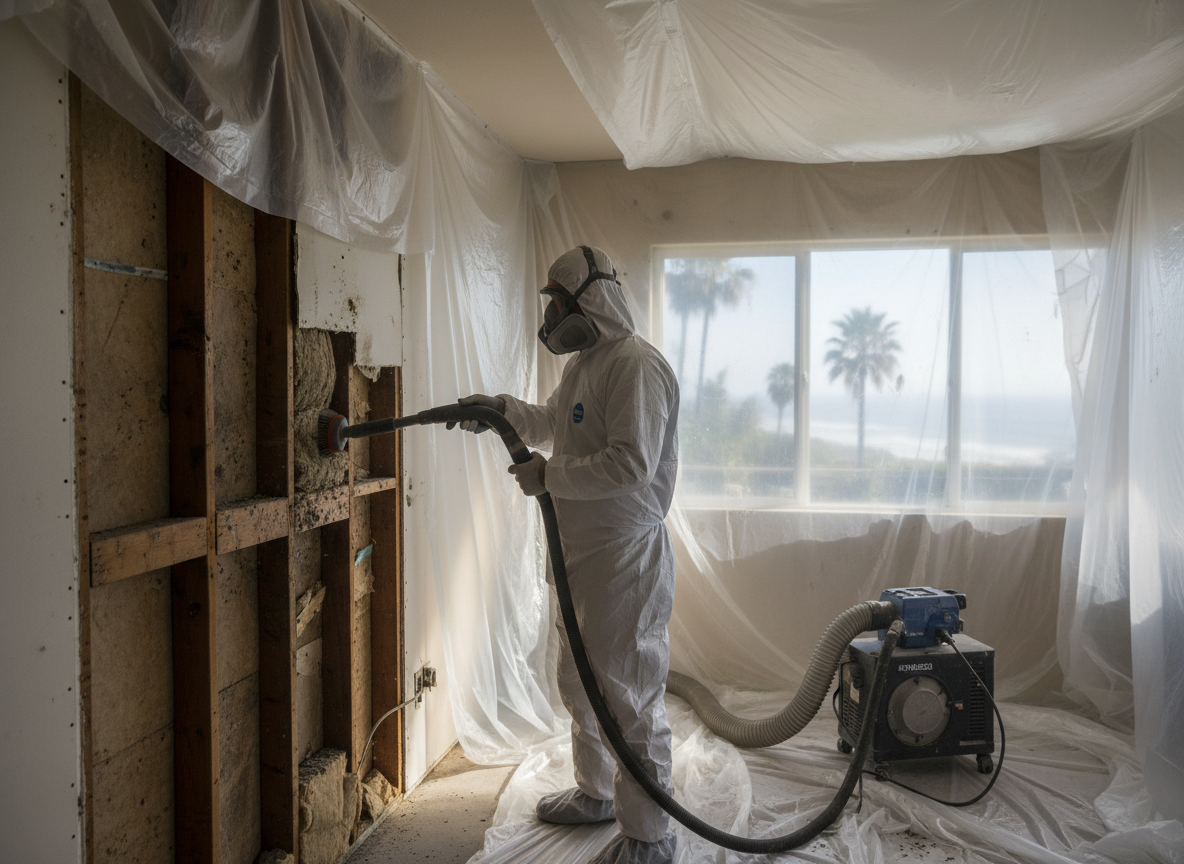
Pacific Palisades sits in Los Angeles County with a mild coastal Mediterranean climate that brings frequent foggy mornings. These conditions keep moisture levels elevated in crawl spaces and behind stucco walls common in homes built through the 1960s in The Village and Castellammare. Mold cleanup near me jobs here often start with hidden growth along foundation lines where ocean air meets cooler soil rather than obvious ceiling stains.
Marquez Knolls properties sit on steeper slopes that channel rainwater toward lower walls and garages. When fog adds daily humidity, cellulose materials in older insulation and drywall absorb water slowly until odors appear. Technicians checking these homes focus on pressure mapping and moisture meter readings at multiple elevations because surface testing alone misses the real source in sloped terrain near Pacific Palisades Park.
Work near Will Rogers State Historic Park and Temescu Park frequently involves single-story ranch homes with original plaster and limited access points. Removing affected material requires protecting adjacent hardwood floors and navigating narrow hallways. Containment barriers must account for afternoon winds that pick up from Santa Monica Canyon and carry spores if not sealed properly.
Seasonal Moisture Patterns
Fog season peaks from late spring through early fall, extending drying times compared with inland Los Angeles County neighborhoods. Homeowners in these months see repeated small outbreaks unless dehumidification targets the actual dew point rather than generic settings.
Technician insight
In Pacific Palisades the thing that catches most people out with mold cleanup near me is how the daily fog keeps crawl-space soil damp year-round in homes built before modern vapor barriers, especially on the slopes in Castellammare and Marquez Knolls.
Hidden Growth Behind Garage Drywall
Water from winter rain pooled against a Castellammare garage wall and wicked upward into drywall. Inspection found active growth extending three feet above grade behind the plaster. Crew removed the lower section, treated framing, and ran drying equipment for 48 hours until readings stabilized. Homeowner later added exterior grading to divert runoff.
How it works
- 1
Initial Assessment
Technician arrives within hours, maps moisture with meters, and identifies affected materials in crawl spaces or wall cavities typical of Pacific Palisades construction.
- 2
Containment Setup
Negative air machines and plastic barriers isolate the work zone to prevent spore spread, especially important on windy days near Santa Monica and Malibu borders.
- 3
Removal and Cleaning
Damaged drywall, insulation, and wood are removed; remaining surfaces are treated with appropriate antimicrobials suited to coastal humidity.
- 4
Drying and Verification
Air movers and dehumidifiers run until readings drop below 12 percent; clearance testing confirms the space is ready for rebuild.
- 5
Final Walkthrough
Homeowner reviews cleared areas and receives guidance on preventing recurrence from ongoing foggy mornings.
Pricing
Upfront quotes provided after inspection; final cost depends on square footage affected, access difficulty, and whether structural drying extends over multiple days.