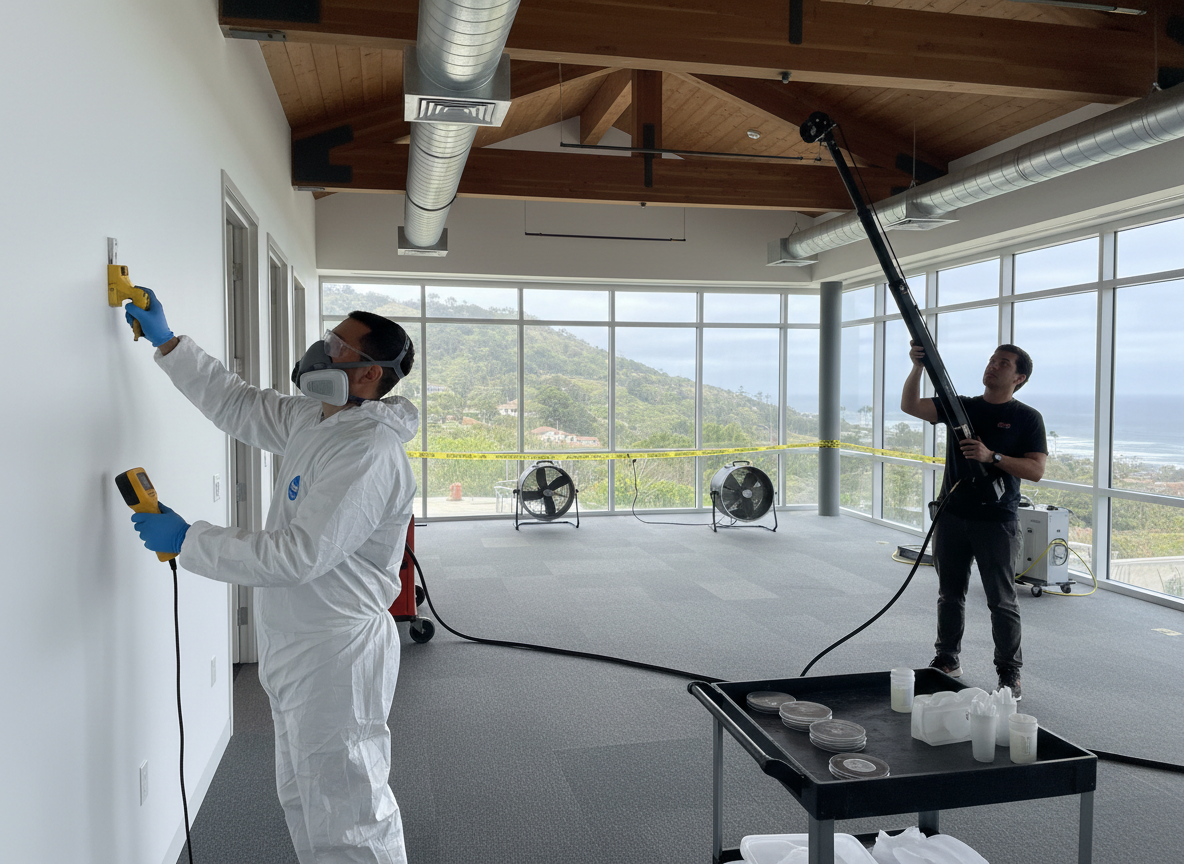
Pacific Palisades commercial properties often sit in older stock near Will Rogers State Historic Park and Pacific Palisades Park where mild coastal Mediterranean climate and frequent foggy mornings drive hidden moisture into stucco, wood framing and flat roofs. Commercial mold inspection must account for these patterns because fog lingers longer in low-lying spots like Castellammare and Marquez Knolls, allowing mold to develop behind tenant improvements and HVAC returns that standard visual checks miss. Inspectors use moisture meters and thermal imaging to trace water intrusion from roof penetrations or poor drainage on sloped terrain common in Los Angeles County coastal zones.
Edge cases arise in mixed-use buildings along Sunset Boulevard where retail spaces share walls with residential units above; mold can migrate through shared ductwork or plumbing chases. Code requirements in Pacific Palisades call for containment protocols that prevent spore release into adjacent occupied spaces, especially when businesses remain open during inspection. Materials such as older plaster and lath in The Village storefronts hold moisture differently than modern drywall, changing how readings are interpreted and where air sampling ports are placed.
Terrain plays a direct role near Temescu Park and the bluffs, where wind-driven fog and occasional heavy rains push water under foundations or into below-grade storage areas. Commercial mold inspection here includes checking exterior grading and French drains that many property managers overlook. Santa Monica and Malibu border properties face similar conditions, so inspectors cross-reference local weather data to predict high-risk periods and schedule follow-up visits after foggy stretches.
Technician insight
In Pacific Palisades, the thing that catches most people out with Commercial mold inspection is how the persistent foggy mornings along the coast near Pacific Palisades Park keep older commercial walls in The Village and Castellammare damp long after the sun appears, so inspectors must check behind tenant improvements that sit against uninsulated stucco.
Retail Suite in The Village
A small retail space reported recurring musty smells after foggy weeks. Inspection found elevated moisture in the rear wall shared with an adjacent unit where roof flashing had failed. Thermal scans confirmed hidden growth behind display shelving. Containment was set and the tenant continued operations while targeted remediation followed.
How it works
- 1
Site Walk and History Review
Walk every commercial space, note tenant complaints, review past leaks and map building age against known Pacific Palisades construction eras.
- 2
Moisture and Thermal Mapping
Use meters and infrared cameras to locate hidden damp areas behind walls, under floors and in ceiling plenums common in coastal fog zones.
- 3
Air and Surface Sampling
Collect targeted samples from HVAC returns, restrooms and storage rooms while maintaining negative pressure to protect ongoing business operations.
- 4
Report and Recommendations
Deliver written findings with photos, moisture readings and prioritized next steps that reference local drainage and weather realities.
Pricing
Pricing varies by square footage, number of stories and access difficulty; contact for an upfront quote based on the specific property.