Pacific Palisades bathrooms often develop mold along shower grout and behind vanities because mild coastal Mediterranean mornings bring persistent fog that keeps humidity elevated even when outdoor temperatures stay moderate. Homes in The Village and Castellammare frequently date to the 1950s and 1960s with original tile work set on moisture-prone plasterboard that wicks water from small leaks at tub edges or failed caulk lines. Technicians must pull baseboards and check subflooring near the toilet because the slight hillside slope common in Marquez Knolls lets water migrate under cabinets before visible staining appears.
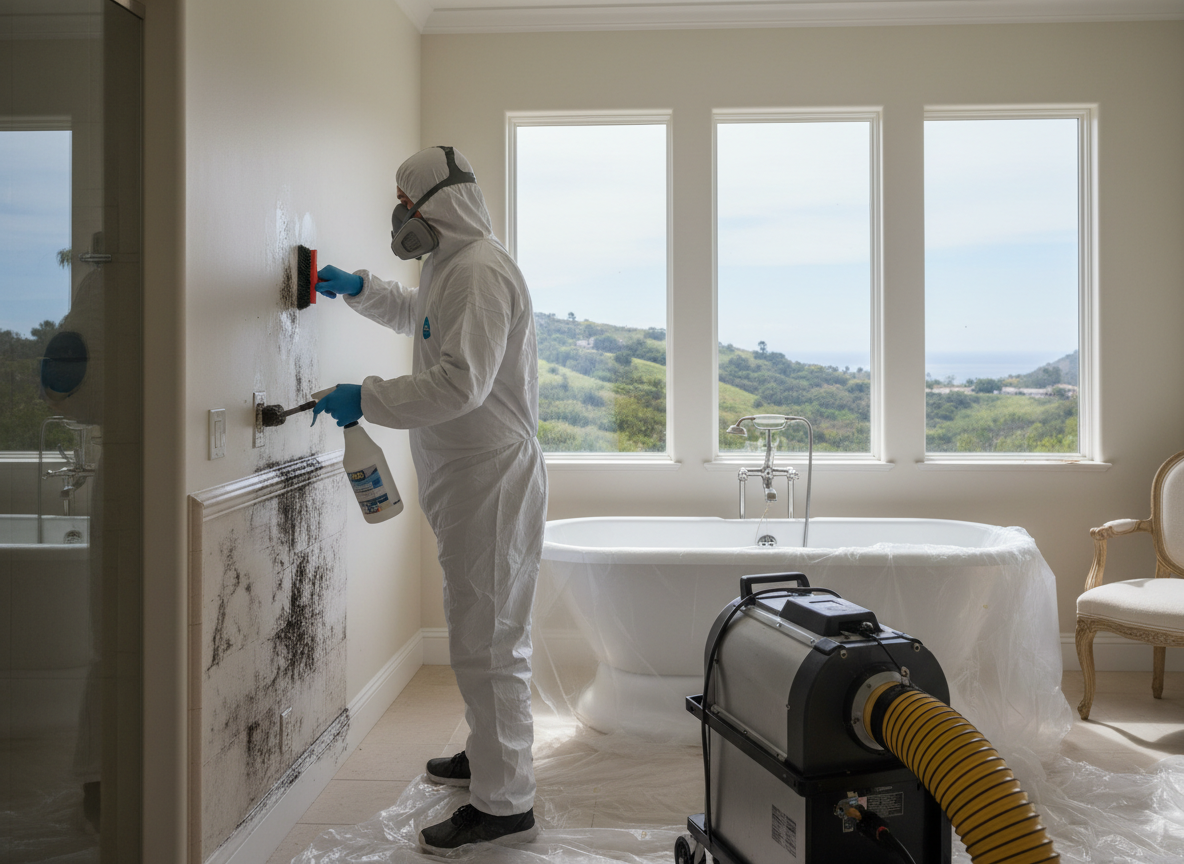
Removal work here differs from inland Los Angeles County jobs because the steady marine layer reduces natural drying, so dehumidifiers must run longer after demolition. Crews contain the space with plastic sheeting sealed to the door frame and exhaust air through a window facing the Pacific rather than into hallways that could spread spores to bedrooms. Edge cases include mold that has reached the shared wall with an adjacent bathroom in duplexes near Temescu Park, requiring coordinated access with neighbors and extra negative-air machines to stay compliant with county health guidelines.
After physical removal, every surface receives an antimicrobial rinse followed by moisture mapping with infrared cameras to locate hidden pockets along pipe chases that run through the slab in many Castellammare homes. Final clearance testing uses air samples collected before and after to confirm levels match outdoor baselines typical for Santa Monica and Malibu coastal zones. Homeowners receive a written report noting any ventilation upgrades, such as adding a timer-controlled exhaust fan, that address the constant morning fog load without altering the home's original character.
Technician insight
In Pacific Palisades the thing that catches most people out with bathroom mold removal service is the way morning fog keeps humidity trapped inside older tile showers in Castellammare homes, so what looks like a small corner spot often turns out to run six inches behind the backer board once you open the wall.
Hidden Growth Behind Vanity in The Village
A homeowner noticed black staining along the base of the vanity but no active leak. Inspection revealed water had wicked from a slow drain gasket into the plasterboard and subfloor, traveling under the toe-kick because of the gentle slope toward Temescu Park. We contained the room, removed the vanity and affected sections of wall and floor, dried the cavity, and treated all surfaces before reinstalling new moisture-resistant materials.
How it works
- 1
Initial Assessment
Technician inspects all wet zones in the bathroom, checks adjacent rooms, and maps moisture with meters while noting construction details typical of Pacific Palisades homes.
- 2
Containment Setup
Plastic barriers and negative air are installed to isolate the bathroom from the rest of the house, with exhaust routed outside to avoid spreading spores into hallways.
- 3
Material Removal
Affected drywall, tile, and cabinetry are cut out and bagged on site, with special care for older plaster in The Village and Castellammare properties.
- 4
Drying and Treatment
Dehumidifiers and air movers run until readings drop below 15 percent moisture content, followed by antimicrobial application on remaining surfaces.
- 5
Final Clearance
Air sampling confirms mold levels match outdoor baselines before barriers come down and the space is returned to the homeowner.
Pricing
Cost depends on square footage affected, depth of hidden growth behind tile or cabinets, and any needed subfloor work in hillside homes.