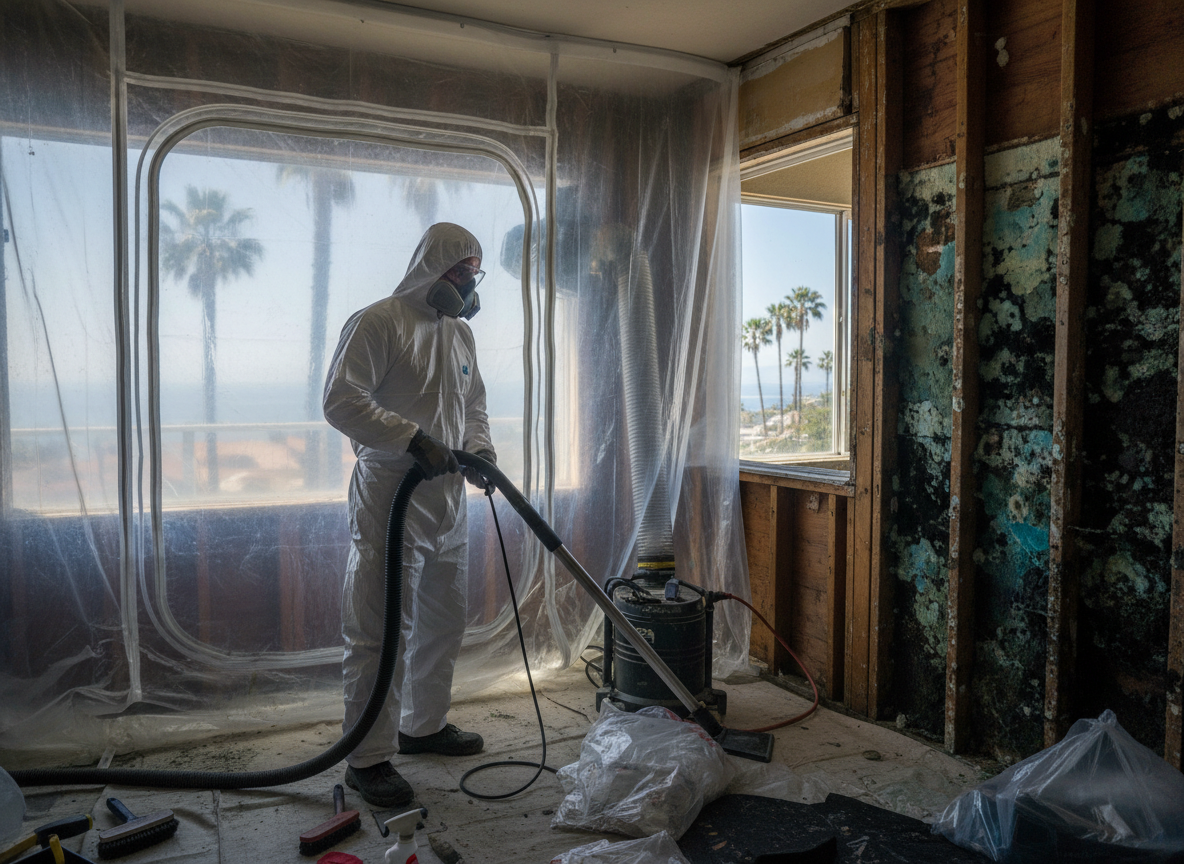
Santa Monica Canyon sits in the lower reaches of Pacific Palisades where older hillside homes back up to steep slopes and the seasonal creek channel. Many properties date to the 1940s and 1950s with original plaster and single-pane windows that trap moisture when morning fog rolls in from the coast. Our crew at 960 Monument St responds directly to calls from residents along Entrada Drive and Adelaide Drive when leaks around rooflines or retaining walls create hidden growth behind cabinets and in crawl spaces.
Because the canyon funnels cool air and fog, relative humidity stays higher than on the ridges above. We see recurring mold on north-facing walls and in garages cut into the slope where water migrates through cracked foundations. Our technicians map airflow from the canyon floor up to Pacific Coast Highway so we can place containment and drying equipment that matches the actual terrain instead of using generic room counts.
Access is tight on the narrow residential streets, so we stage equipment at the Monument Street yard and bring only what fits the driveway. Homeowners in the canyon often need same-day containment before the next marine layer adds more moisture, which is why we keep trucks ready around the clock.
Around Santa Monica Canyon
We regularly work near:
- 📍Temescal Canyon Park
- 📍Will Rogers State Historic Park
- 📍Entrada Drive
- 📍Adelaide Drive
- 📍Pacific Coast Highway at Santa Monica Canyon
- 📍Chautauqua Boulevard
Mold Remediation Service Pacific Palisades in Santa Monica Canyon — Local Notes
- •Homes on the canyon floor sit lower than surrounding streets, so groundwater and runoff from slopes above often reach slab edges after heavy rain, requiring targeted drying behind baseboards.
- •Fog drip from mature trees along the creek channel keeps exterior walls damp longer than in Marquez Knolls or The Village, increasing the chance of hidden growth in attic spaces with poor ventilation.
- •Narrow driveways and steep grades limit equipment size, so we use compact dehumidifiers and negative-air machines that can be carried up stairs without damaging landscaping on lots that drop sharply toward the channel.
- •Many 1950s homes here still have original redwood siding and lath-and-plaster interiors that absorb and hold water, so removal often extends past obvious stains to prevent regrowth once the marine layer returns.